

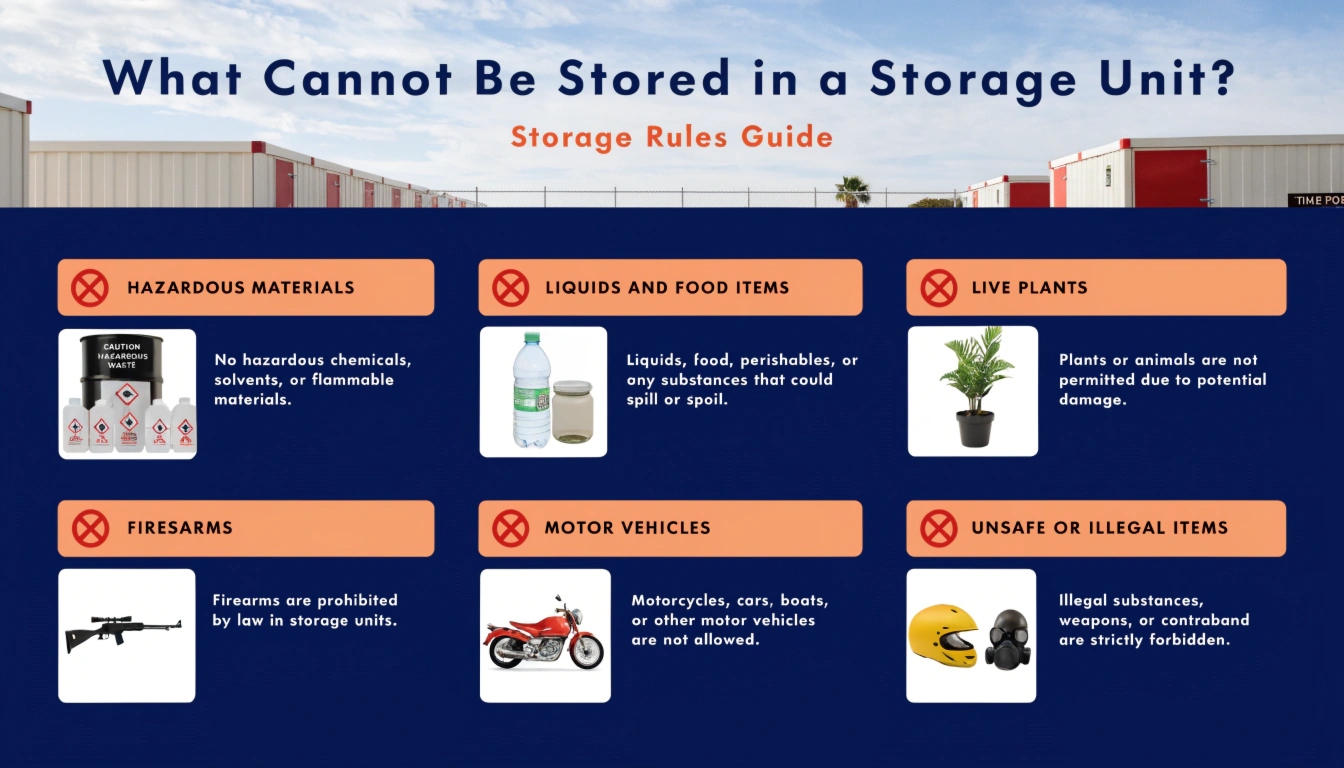
Self storage units are a convenient solution for storing furniture, household belongings, business inventory, and seasonal items. However, not every item can be placed in storage.
Understanding what cannot be stored in a storage unit helps protect your belongings, the storage facility, and other customers. Most storage providers follow strict safety guidelines to prevent damage, hazards, and legal issues.
If you’re planning to rent a unit, it’s always helpful to review the rules of a trusted self storage facility before moving your belongings.
Perishable Food Items
Food items should never be stored in a storage unit. Perishable goods can spoil quickly and attract pests such as rodents and insects.
Examples of prohibited food items include:
- Fresh fruits and vegetables
- Meat and seafood
- Dairy products
- Open food packages
Rotting food can create unpleasant odors and cause pest infestations that may damage other stored belongings.
Hazardous or Flammable Materials
Storage facilities strictly prohibit hazardous or flammable materials because they pose serious safety risks.
Examples include:
- Gasoline
- Propane tanks
- Fireworks
- Paint thinner
- Industrial chemicals
These substances can cause fires or explosions, which can endanger the entire storage facility.
When storing household belongings, it’s important to only place safe items inside your secure storage unit.
Illegal Items
Storage units cannot be used to store illegal goods or stolen property. Storage providers enforce strict policies to ensure their facilities remain compliant with local laws.
Examples of illegal items include:
- Stolen goods
- Illegal drugs
- Unauthorized weapons
If illegal items are discovered, storage facilities may involve law enforcement authorities.
Living Creatures
Animals or people cannot live inside storage units. Storage spaces are designed strictly for storing belongings and do not provide proper ventilation, sanitation, or safety.
This includes:
- Pets
- Livestock
- Temporary housing
Living in storage units is unsafe and prohibited by most facilities.
Wet or Moldy Items
Items that are wet or contaminated with mold should not be placed in storage. Moisture can spread quickly and damage other belongings inside the unit.
Examples include:
- Wet furniture
- Damp mattresses
- Mold-damaged materials
Before placing items in storage, make sure they are clean and completely dry.
Final Thoughts
Self storage units are designed to store a wide range of belongings safely, but certain items are restricted for safety and legal reasons. Understanding what cannot be stored helps ensure your belongings remain secure and your storage facility stays safe.
If you’re looking for reliable and affordable storage options, explore the secure storage solutions available at AllTimeStorage for personal or business storage needs.