

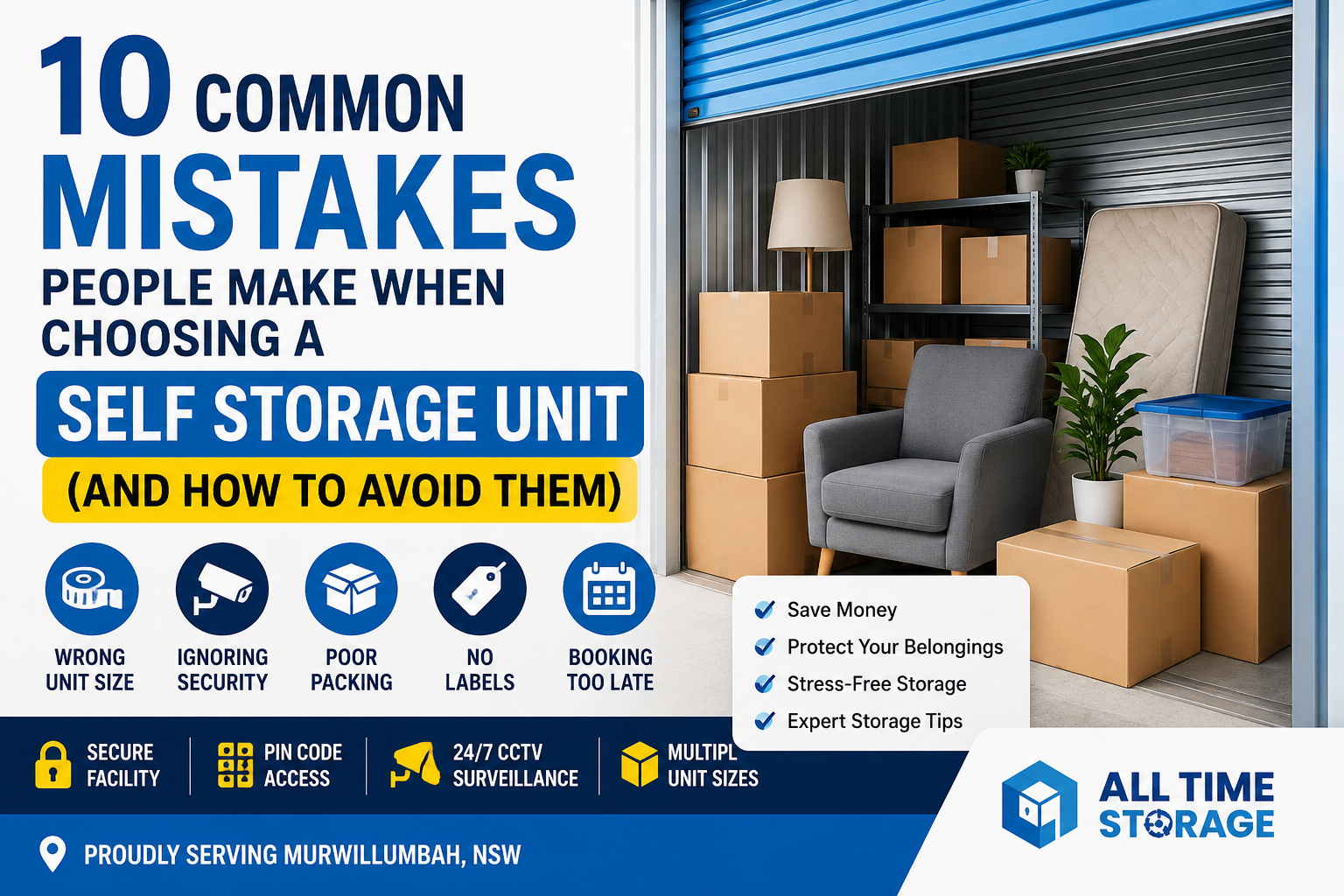
10 Common Mistakes People Make When Choosing a Self Storage Unit (And How to Avoid Them)
Introduction
Choosing a self-storage unit may seem straightforward, but many people end up paying more than necessary, selecting the wrong unit size, or storing their belongings in unsuitable conditions. Whether you’re moving home, renovating, downsizing, running a business, or simply need extra space, choosing the right storage solution can save you time, money, and unnecessary stress.
At All Time Storage in Murwillumbah, NSW, we help homeowners, families, students, and businesses find secure, convenient, and affordable storage solutions. In this guide, we’ll explore the ten most common mistakes people make when choosing self-storage—and how you can avoid them.
Table of Contents
- Why Choosing the Right Storage Unit Matters
- 10 Common Self Storage Mistakes
- How to Choose the Right Storage Unit
- Benefits of Professional Storage
- Frequently Asked Questions
- Final Thoughts
Why Choosing the Right Storage Unit Matters
A good storage facility offers more than just extra space. It protects your belongings, provides convenient access, and gives you peace of mind. Making the right choice from the start helps you avoid unnecessary costs and keeps your valuables safe.
1. Choosing the Wrong Storage Unit Size
One of the biggest mistakes is renting a unit that’s either too small or far larger than you actually need.
Problems
- Wasted money on unused space
- Difficulty organising belongings
- Risk of damage from overcrowding
Solution
Create an inventory before renting. Estimate how much furniture, boxes, and equipment you’ll be storing and ask the storage provider for guidance.
2. Ignoring Security Features
Not all storage facilities provide the same level of security.
Look for features such as:
- CCTV surveillance
- Secure gated access
- Individual PIN entry
- Well-lit premises
- Quality locks
- Regular site monitoring
Choosing a secure facility significantly reduces the risk of theft or damage.
3. Failing to Label Boxes
Many people simply stack boxes without labels.
Months later, finding a single item becomes frustrating.
Better Approach
- Label every box clearly.
- Use waterproof markers.
- Number each box.
- Keep an inventory list.
This simple step can save hours of searching.
4. Packing Items Incorrectly
Poor packing can lead to broken furniture, damaged electronics, or crushed boxes.
Best Practices
- Use strong moving boxes.
- Wrap fragile items in bubble wrap.
- Fill empty spaces to prevent movement.
- Store heavy boxes at the bottom.
- Protect furniture with covers.
5. Not Using Shelving
Stacking boxes directly on the floor makes access difficult.
Installing simple shelving allows you to:
- Improve organisation
- Maximise space
- Find items faster
- Reduce lifting injuries
6. Storing Items You Don’t Actually Need
Storage should not become a place for unwanted clutter.
Before moving items into storage:
- Donate unused furniture
- Sell unwanted appliances
- Recycle broken items
- Dispose of rubbish responsibly
Only store items that have genuine value or future use.
7. Forgetting About Accessibility
Think about how often you’ll need access.
Frequently used items should be placed:
- Near the front
- Clearly labelled
- Easy to reach
Seasonal items can be stored at the back.
8. Choosing Based Only on Price
The cheapest storage option isn’t always the best value.
Consider:
- Security
- Cleanliness
- Customer service
- Access hours
- Location
- Reputation
A slightly higher-quality facility often provides better long-term value.
9. Waiting Until the Last Minute
During busy moving seasons, popular storage units fill quickly.
Booking early gives you:
- More size options
- Better availability
- Less moving stress
- Easier planning
10. Not Asking Questions
Many customers don’t ask important questions before signing up.
Useful questions include:
- What unit sizes are available?
- Are there any hidden fees?
- What security systems are in place?
- When can I access my belongings?
- What packing supplies are available?
A reliable storage provider will gladly answer all your questions.
Quick Comparison Table
| Mistake | Better Solution |
|---|---|
| Wrong unit size | Ask for expert size recommendations |
| Poor packing | Use quality packing materials |
| No labels | Label every box clearly |
| Cheap facility | Compare value, not just price |
| Poor organisation | Create an inventory list |
| Ignoring security | Choose CCTV and secure access |
| Late booking | Reserve your unit early |
Benefits of Choosing the Right Storage Facility
Choosing a professional storage provider offers several advantages:
- Safe and secure storage
- Flexible storage options
- Convenient access
- Clean and well-maintained units
- Extra space at home or work
- Reduced moving stress
- Better organisation
Expert Tips
- Create a storage map before loading your unit.
- Keep an aisle through the centre for easy access.
- Store valuable documents in waterproof containers.
- Place frequently used items near the entrance.
- Review your storage contents every few months.
Frequently Asked Questions
How do I know what size storage unit I need?
Make a list of everything you plan to store and speak with the storage team for a recommendation.
Is self-storage safe?
A reputable facility with CCTV, secure access, and well-maintained premises provides excellent protection for your belongings.
Can I store furniture?
Yes. Furniture storage is one of the most common reasons people rent storage units.
How long can I rent a storage unit?
Most facilities offer flexible rental periods depending on your needs.
Should I insure my stored belongings?
Insurance is recommended for valuable or sentimental items.
Can businesses use self-storage?
Absolutely. Many businesses use storage for inventory, equipment, files, and seasonal stock.
What’s the best way to pack fragile items?
Use bubble wrap, sturdy boxes, and clearly mark boxes as “Fragile.”
When should I book my storage unit?
Book as early as possible, especially if you’re moving during busy periods.
Conclusion
Choosing the right self-storage facility is about much more than finding extra space. By avoiding these common mistakes, you’ll protect your belongings, save money, and enjoy a smoother storage experience.
Whether you’re moving, renovating, decluttering, or expanding your business, taking the time to plan ahead will make all the difference.
If you’re looking for secure, convenient, and reliable self-storage in Murwillumbah, All Time Storage offers a range of storage solutions designed to meet the needs of homeowners, families, students, and businesses alike.
Call to Action
Need secure self-storage in Murwillumbah?
Contact All Time Storage today to find the perfect storage unit for your needs. Our friendly team can help you choose the right size, answer your questions, and make storing your belongings simple, safe, and stress-free.