
What Can and Cannot Be Stored in a Self Storage Unit?
Self storage can be a practical solution when you need extra space at home, during a move, while renovating, or for your business. But before you fill a storage unit, it is important to understand what you can safely store and what should stay out.
Whether you are looking for self storage in Murwillumbah, moving house, storing furniture, or keeping business stock organised, knowing the basic storage rules can help you avoid problems and protect your belongings.
At All Time Storage in Murwillumbah, customers can choose from multiple storage unit sizes for a range of household and business storage needs. However, not every item is suitable for a storage facility. The safest approach is to check the facility’s terms and conditions before bringing anything that could be hazardous, illegal, perishable or unsuitable for storage.
What Can You Store in a Self Storage Unit?
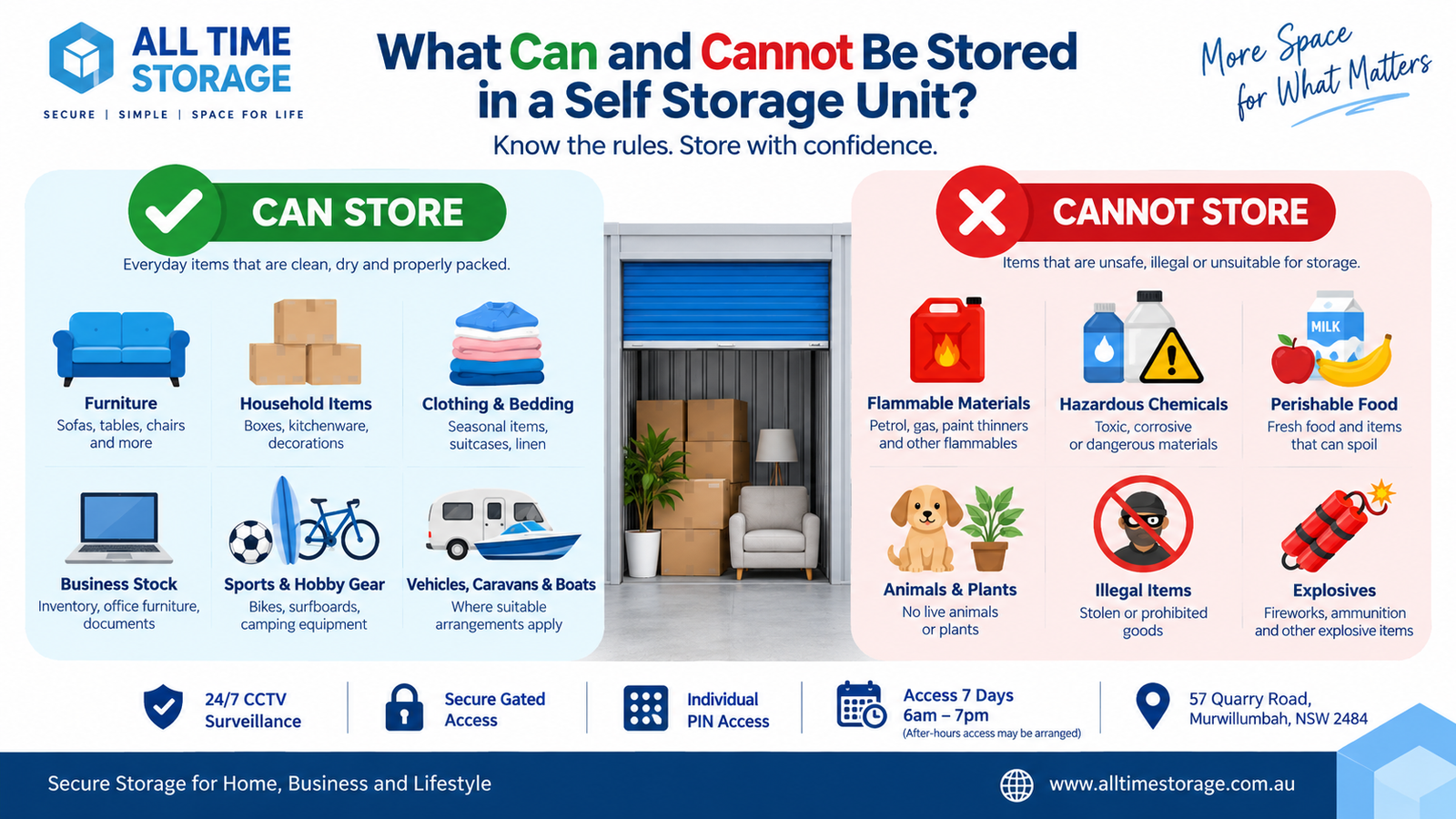
Most everyday household, personal and business belongings can be suitable for self storage when they are properly packed and stored.
Common examples include:
- Furniture
- Mattresses and bed frames
- Tables and chairs
- Sofas and cabinets
- Books and documents
- Clothing and seasonal items
- Kitchenware
- Household appliances
- Business stock and inventory
- Office furniture
- Files and equipment
- Sports equipment
- Garden furniture
- Moving boxes
- Some vehicles, caravans and boats, where suitable arrangements are available
The important point is that items should be clean, dry and properly prepared before they go into storage.
Household Furniture
Furniture is one of the most common reasons people rent storage units.
If you are moving, downsizing, renovating or simply trying to create more space, a storage unit can keep furniture safely out of the way until you need it again.
Before storing furniture:
- Clean each item thoroughly.
- Make sure it is completely dry.
- Disassemble large furniture where practical.
- Cover upholstered furniture with suitable protective material.
- Avoid placing heavy items directly on delicate surfaces.
- Leave enough space around items for easier access.
For wooden furniture, avoid wrapping it in materials that can trap moisture for long periods. Use suitable covers and allow appropriate ventilation around stored items.
Clothing, Bedding and Personal Belongings
Clothing, bedding, decorations, suitcases and seasonal belongings can all be useful candidates for storage.
For the best results, wash and completely dry clothing and fabrics before packing them away. Use sturdy storage containers where appropriate and avoid overfilling boxes.
It can also help to label each container clearly.
Instead of writing only “clothes”, consider labels such as:
- Winter clothing
- Children’s clothes
- Spare bedding
- Christmas decorations
- Camping equipment
This makes finding something later much easier.
Business Stock and Office Equipment
Self storage is not just for households. Small businesses can use storage units to keep inventory, documents, furniture, displays and equipment organised without filling valuable office space.
For example, a local business might store:
- Boxes of products
- Promotional materials
- Shelving
- Office furniture
- Archived documents
- Event equipment
- Seasonal stock
- Packaging materials
Before storing business inventory, consider how frequently you will need access. Items that are needed regularly should be positioned where they can be reached without unpacking the entire unit.
Documents, Books and Important Records
Paperwork can take up more room than expected, particularly for businesses and households going through a move or decluttering project.
Documents, books and records should be packed carefully in sturdy boxes. Keep them away from damp conditions and avoid making boxes so heavy that they become difficult or unsafe to move.
For important records, consider whether you need a separate backup. A storage unit should not be your only copy of irreplaceable documents.
Sports, Camping and Hobby Equipment
Self storage can also be useful for belongings that you use occasionally but do not want taking up space at home.
Examples include:
- Camping equipment
- Surfboards
- Bicycles
- Sporting equipment
- Fishing equipment
- Musical equipment
- Hobby supplies
- Outdoor furniture
Clean equipment before storage and ensure anything that has been exposed to water or mud is completely dry.
What Cannot Be Stored in a Self Storage Unit?
Storage facilities generally prohibit items that could create a safety risk, damage other customers’ belongings, attract pests, cause unpleasant odours or create legal or environmental problems.
The exact list depends on the facility’s agreement and applicable laws, so always check the storage provider’s rules before storing anything unusual.
Items commonly prohibited include:
- Flammable liquids and materials
- Explosives
- Illegal substances
- Hazardous chemicals
- Toxic materials
- Perishable food
- Live animals
- Plants
- Items that are leaking or contaminated
- Stolen or illegally obtained goods
- Other materials specifically prohibited under the storage agreement
If you are unsure whether an item is acceptable, ask the storage facility before bringing it in.
Food and Perishable Items
Food is generally not suitable for self storage, particularly fresh or perishable food.
Food can spoil, create strong odours and attract insects or rodents. Even sealed food products may not be appropriate depending on the facility’s rules.
If you need to store kitchen equipment, make sure refrigerators, freezers and other appliances are thoroughly cleaned and dried before placing them into storage.
Flammable and Hazardous Materials
One of the most important storage rules is to avoid placing hazardous materials inside a storage unit.
This can include items such as:
- Petrol
- Diesel
- Gas cylinders
- Solvents
- Paint thinners
- Certain chemicals
- Explosives
- Other flammable or hazardous substances
These materials can pose serious risks to people, property and other storage units.
If you have a specific chemical, fuel container or potentially hazardous product that you are considering storing, check with the facility first rather than assuming it is permitted.
Illegal or Prohibited Items
Storage units cannot be used to store illegal goods or anything prohibited by law or the storage agreement.
This includes stolen property and illegal substances.
If an item is questionable from a legal or safety perspective, it should not be placed into a storage unit without confirming that it is permitted.
Living Things: Animals and Plants
Storage units are designed for belongings, not living things.
Animals should never be left inside a storage unit. Plants are also generally unsuitable because they need light, water and appropriate environmental conditions.
A storage unit should remain a clean, secure place for stored property rather than a living environment.
Can You Store a Car, Caravan or Boat?
Vehicle storage is different from ordinary household storage because the vehicle needs suitable space and access arrangements.
If you need to store a caravan or boat, check whether your chosen facility offers an appropriate storage option and what conditions apply.
All Time Storage provides storage options for caravans and boats, making it possible to keep larger recreational assets stored away when they are not being used.
Before storing a vehicle, caravan or boat, make sure you understand the facility’s requirements relating to:
- Vehicle size
- Access
- Registration and insurance
- Fuel and batteries
- Security
- Parking or storage position
- Required documentation
Never assume that a standard storage unit is suitable for a vehicle.
How to Prepare Items Before Putting Them Into Storage
Choosing the right storage unit is only part of the process. Preparing your belongings properly can make a major difference.
1. Clean Everything
Dust, dirt, food residue and moisture can create problems during long-term storage.
Clean furniture, appliances, sports equipment and other belongings before packing them away.
2. Make Sure Everything Is Dry
Moisture is one of the biggest things to avoid when preparing belongings for storage.
Never pack damp clothing, wet equipment or recently cleaned items while they are still wet.
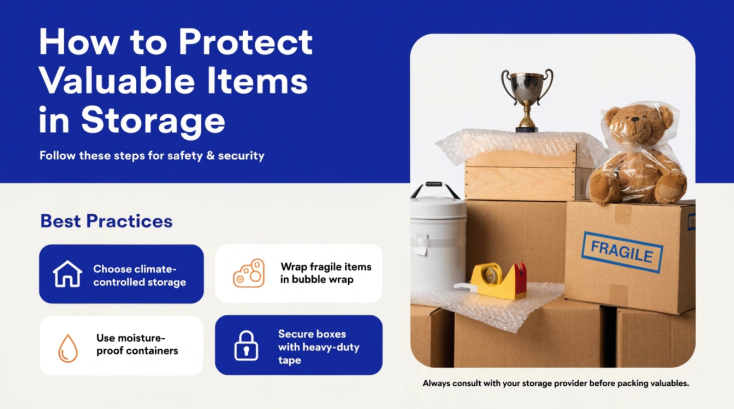
3. Use Suitable Packaging
Use strong boxes and appropriate protective materials.
For delicate belongings, consider:
- Bubble wrap
- Protective covers
- Furniture blankets
- Sturdy containers
- Appropriate packing paper
Avoid using unsuitable materials that could trap moisture against furniture or other items.
4. Label Every Box
A well-labelled storage unit is much easier to manage.
Use clear labels on multiple sides of each box and consider keeping a simple inventory of the contents.
5. Create an Access Path
Do not pack your storage unit so tightly that you cannot reach anything.
Place frequently needed items near the front and less frequently used belongings further back.
How to Choose the Right Storage Unit Size
One of the most common mistakes customers make is choosing a unit based only on the number of boxes they have.
Think about the entire collection of belongings you need to store.
For example:
Small storage needs:
Boxes, seasonal belongings, documents and smaller personal items.
Medium storage needs:
Furniture, appliances, boxes and belongings from part of a home.
Larger storage needs:
The contents of an entire home, business inventory, large furniture collections or other bulky belongings.
If you are unsure, a storage space calculator can help you estimate how much room your belongings may require.
The goal is to choose a unit that gives you enough room to store your belongings safely while still allowing practical access.
Why Secure Storage Matters
When you are storing valuable household or business belongings, security is naturally an important consideration.
All Time Storage in Murwillumbah uses security measures including 24-hour CCTV surveillance, secure gated access, individual PIN access and individualised padlocks.
The facility also provides a clean indoor storage environment and multiple storage unit sizes to accommodate different storage requirements.
Access is available seven days a week, generally between 6am and 7pm, with after-hours access potentially available by arrangement.
For customers searching for secure storage in Murwillumbah, these features can provide an important part of the storage experience.
Frequently Asked Questions
Can I store furniture in a self storage unit?
Yes. Furniture is one of the most common items stored in self storage. Clean and dry furniture thoroughly before storage and use suitable protective covers.
Can I store food in a storage unit?
Perishable food should not be stored in a self storage unit. Other food products may also be restricted, so check the facility’s storage conditions before bringing any food.
Can I store business inventory?
Yes, many businesses use self storage for stock, equipment, documents and other business belongings. Make sure all items comply with the facility’s storage rules.
Can I store a caravan or boat?
Some storage facilities provide dedicated caravan and boat storage. Check the available space, access arrangements and facility requirements before booking.
Can I store chemicals or petrol?
Hazardous, flammable or potentially dangerous materials are generally prohibited. Always check with the storage facility if you are unsure about a particular substance.
Can I access my storage unit whenever I want?
Access hours depend on the facility. At All Time Storage, access is available seven days a week, generally from 6am to 7pm, with after-hours access potentially available by arrangement.
What should I do if I am unsure whether an item can be stored?
The safest option is to contact the storage facility before bringing the item in. The team can confirm whether it is permitted under the facility’s rules and conditions.
Final Thoughts
Self storage can make moving, renovating, downsizing, decluttering and managing business belongings much easier. The key is knowing what belongs in a storage unit and what does not.
Furniture, clothing, documents, appliances, business stock, sporting equipment and many other everyday belongings can often be stored when they are clean, dry and properly packed. Hazardous, flammable, illegal, perishable or living items generally do not belong in a storage facility.
If you are looking for storage units in Murwillumbah, All Time Storage offers a range of storage options for household and business needs, along with caravan and boat storage options.
Before booking, consider how much you need to store, how often you will need access and how you can prepare your belongings for storage. Choosing the right space and packing everything properly can help make your storage experience simpler and more organised.
Need extra storage space in Murwillumbah or the surrounding area? Explore the storage options available at All Time Storage, use the space calculator to estimate your requirements, or contact the team to discuss your storage needs.