

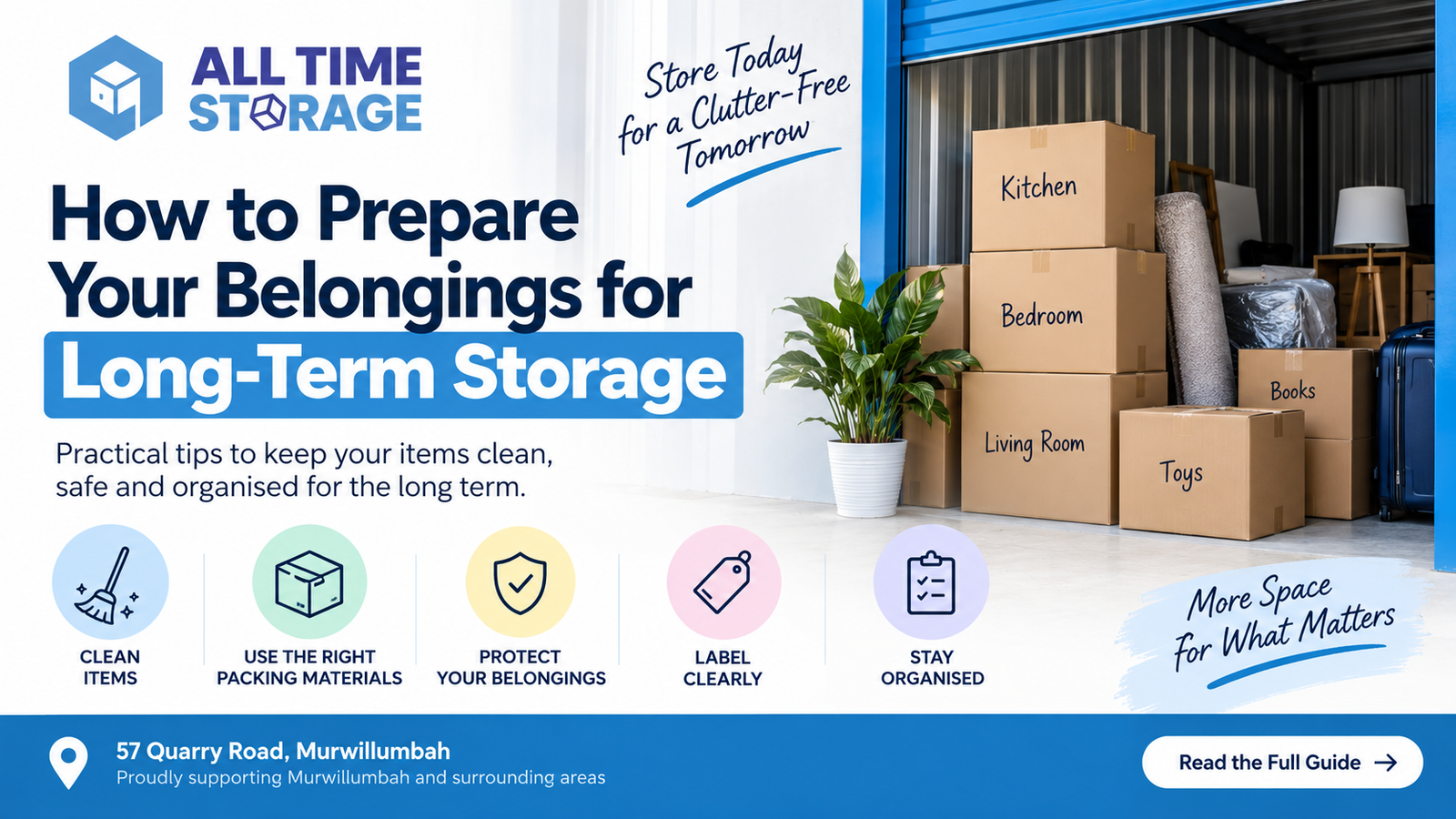
Long-term storage is useful when you need to keep your belongings safe for several months or even longer. Whether you are moving overseas, renovating your home, downsizing, managing an estate, or simply need extra space, putting your belongings into storage is often an easy solution. But storing items for a long period requires more preparation than storing them for a few weeks.
Furniture, clothing, appliances, documents, boxes and household items can all benefit from proper preparation before they go into a storage unit. Cleaning everything thoroughly, using suitable packing materials, protecting furniture, labelling boxes and allowing enough ventilation and space can make a significant difference when you eventually need your belongings again.
For people in Murwillumbah, Tweed Heads, Kingscliff, Chinderah, Coolangatta and surrounding areas, choosing the right storage facility is only one part of the process. The other important part is preparing your belongings correctly before they are stored.
At All Time Storage in Murwillumbah, customers use storage for many different reasons, from household moves and renovations to business stock and longer-term storage needs. Here is a practical guide to help you prepare your belongings properly.
1. Start by Sorting Everything
Before packing anything, take the time to sort through your belongings.
Long-term storage is not the right place for things you no longer need. If an item has been sitting unused for years and you have no intention of using it again, storing it simply creates another expense and takes up valuable space.
Create a few basic groups:
- Items you definitely want to keep
- Items that need to go into storage
- Items you may need soon
- Items you can donate
- Items you can sell
- Items that should be disposed of
This step can save you considerable time later.
For example, if you are moving from a larger house in Murwillumbah into a smaller property, you may discover that some furniture will not fit in your new home. Instead of making a quick decision about what to do with it, you can place selected items into storage while you decide what you want to keep permanently.
The same approach can work during renovations. You may not want to get rid of furniture simply because you cannot use it while work is happening.
2. Clean Everything Before It Goes Into Storage
One of the simplest but most important long-term storage tips is to clean your belongings before packing them.
Dust, dirt, food residue and moisture can create problems when items are left packed away for months.
Furniture should be dusted and cleaned according to the manufacturer’s recommendations. Kitchen appliances should be emptied and cleaned. Outdoor equipment should also be cleaned before storage.
Pay particular attention to:
- Refrigerators and freezers
- Washing machines
- Dishwashers
- Sofas
- Mattresses
- Wooden furniture
- Metal furniture
- Kitchen appliances
- Tools
- Children’s equipment
Do not put dirty or damp items straight into boxes.
Even if something looks clean enough, remember that it may remain untouched for a long time. A little preparation before storage is much easier than dealing with unpleasant surprises months later.
3. Make Sure Everything Is Completely Dry
Cleaning and drying go together.
If you wash something before storage, make sure it is completely dry before wrapping or packing it.
This is particularly important for:
- Clothing
- Bedding
- Towels
- Kitchen equipment
- Plastic containers
- Wooden furniture
- Metal items
- Sports equipment
Never seal damp clothing or fabric inside plastic containers or bags for long periods.
Similarly, appliances that have been washed or wiped down should be completely dry before being packed away.
The goal is simple: don’t lock moisture inside your packaging.
4. Use the Right Packing Materials
The quality of your packing can have a major effect on how well your belongings hold up during long-term storage.
Strong boxes are generally better than old, damaged cardboard boxes that have already been used several times.
Try to use boxes that are:
- Clean
- Dry
- Strong
- Suitable for the weight of their contents
- Easy to stack
Do not make every box extremely heavy.
For example, instead of filling a large box entirely with books, use a smaller box for heavier items and larger boxes for lighter belongings.
At All Time Storage, customers can also access packing and storage supplies, which can make preparing for storage more convenient.
When wrapping individual items, use suitable protective materials such as bubble wrap, packing paper, furniture covers and sturdy containers where appropriate.
5. Protect Your Furniture Properly
Furniture often takes up the largest amount of space in a household storageS unit, so it deserves extra attention.
Before storing furniture:
- Clean it thoroughly.
- Make sure it is completely dry.
- Remove drawers where practical.
- Protect delicate surfaces.
- Cover upholstered furniture appropriately.
- Disassemble larger furniture where possible.
- Keep hardware together in labelled bags.
If you are storing a bed frame, dining table or shelving unit, dismantling it can save space and make the storage unit easier to organise.
Keep screws, bolts and fittings in a sealed bag and label the bag clearly.
For example:
“Dining table – screws and fittings”
Then attach the bag securely to the relevant furniture or place it in a clearly labelled box.
This small step can save a lot of frustration later.
6. Give Clothing and Bedding Extra Attention
Clothing, blankets and bedding should be clean and completely dry before they are stored.
Avoid putting clothes into storage straight after wearing them. Even small amounts of moisture, body oils or food residue can create unpleasant problems over time.
For long-term storage:
- Wash clothing before packing.
- Dry everything completely.
- Fold items neatly.
- Use suitable storage containers.
- Avoid overfilling boxes.
- Label containers by contents.
- Keep frequently used clothing separate.
You may also want to organise clothing by season.
For example:
Box 1 – Winter clothing
Box 2 – Summer clothing
Box 3 – Spare bedding
This makes it much easier to find something later without opening every box.
7. Label Every Box Properly
Good labelling is one of the biggest differences between an organised storage unit and a frustrating one.
Do not simply write:
“Stuff”
or
“Household.”
Instead, write something useful.
For example:
Kitchen – plates and cookware
Bedroom – spare bedding
Office – documents and stationery
Garage – tools
You can also number your boxes.
For example:
- Box 01 – Kitchen
- Box 02 – Kitchen
- Box 03 – Bedroom
- Box 04 – Office
- Box 05 – Garage
If you have many boxes, creating a simple inventory matching these numbers can make finding things much easier.
8. Create a Storage Inventory
For long-term storage, an inventory is worth the extra effort.
Your inventory does not need to be complicated.
A simple spreadsheet or written list can include:
| Box Number | Contents | Location |
|---|---|---|
| 01 | Kitchen items | Front |
| 02 | Bedding | Left side |
| 03 | Books | Rear |
| 04 | Office items | Right side |
You can also take photographs of valuable furniture and important items before placing them into storage.
Photographs provide a useful record of what you stored and the condition of the items at the time.
If you are storing business inventory, your inventory system can be more detailed, including product names, quantities and box numbers.
9. Don’t Pack the Storage Unit Too Tightly
It can be tempting to use every available centimetre of your storage unit.
However, completely filling the space can make it difficult to access your belongings later.
You should be able to reach the items you are most likely to need.
Think about creating a simple layout:
Front: items you may need soon
Middle: medium-priority belongings
Back: items you expect to leave untouched for a long time
Leave practical pathways where possible.
This is especially helpful if you are storing furniture and many boxes together.
10. Keep Frequently Needed Items Accessible
Not everything you put into long-term storage will necessarily remain untouched.
You might suddenly need:
- Important paperwork
- Seasonal clothing
- Children’s belongings
- Business stock
- Spare furniture
- Tools
- Family keepsakes
Think about this before loading the unit.
Items you may need should not be buried behind a wardrobe, mattress and twenty boxes.
A little planning at the beginning can save you considerable effort later.
11. Choose the Right Storage Unit Size
Choosing the correct unit size is another important part of preparing belongings for long-term storage.
A unit that is too small can leave you struggling to organise everything.
A unit that is much larger than necessary may mean you are paying for unused space.
Before booking storage, make a rough list of the furniture, boxes and other belongings you need to store.
Consider:
- Number of boxes
- Sofas
- Beds
- Tables
- Chairs
- Appliances
- Shelving
- Business stock
- Outdoor equipment
All Time Storage provides storage options in Murwillumbah, and its space calculator can help you estimate the amount of space your belongings may require.
For customers moving from areas such as Tweed Heads, Kingscliff or Chinderah, estimating your storage requirements before moving day can also make the whole process easier.
12. Think About Security Before Storing Valuable Items
If you are storing valuable belongings, security should be part of your decision-making process.
Before choosing a storage facility, ask about:
- CCTV monitoring
- Access control
- Individual access codes
- Locks
- Site security
- Access hours
- Insurance options
At All Time Storage in Murwillumbah, the facility uses 24/7 CCTV, individualised gate PINs and individualised padlocks.
The site also provides customer access seven days a week, generally between 6am and 7pm, with after-hours access available by arrangement.
If you are storing particularly valuable possessions, it is also worth checking your insurance requirements before moving everything into storage.
13. Don’t Store Items That Aren’t Suitable
Not every household item belongs in a storage unit.
Before packing, check what your storage provider allows and does not allow.
Items such as hazardous materials, illegal goods, flammable substances and other unsuitable materials should not be placed into storage.
If you are unsure about a particular item, ask the storage facility before bringing it to the site.
This is particularly important for garages, workshops and business premises where there may be chemicals, fuel or other materials that you would not normally keep inside the house.
14. Prepare Appliances Carefully
Large appliances require some additional preparation.
For example, refrigerators and freezers should be emptied and thoroughly cleaned before storage.
Washing machines should be drained and dried properly.
Small appliances should also be cleaned before being boxed.
Where possible, keep original packaging for expensive appliances. If you no longer have the original packaging, use suitable protective materials and strong boxes.
Do not place heavy items on top of delicate appliances simply because there is empty space available.
15. Disassemble Large Items Where Possible
Some furniture can be safely dismantled to make transportation and storage easier.
Examples include:
- Bed frames
- Dining tables
- Shelving units
- Desks
- Cabinets
- Some outdoor furniture
Keep all screws and fittings together.
A small labelled bag can prevent a surprisingly big problem later.
You can also take a photograph of furniture before dismantling it. This gives you a visual reference when you eventually put it back together.
16. Use Covers Carefully
Furniture covers can provide useful protection from dust and accidental marks.
However, avoid wrapping everything so tightly that there is no room for practical airflow around the item.
Use appropriate covers for sofas, mattresses and other furniture, and follow the manufacturer’s recommendations where applicable.
The aim is protection without creating a sealed environment around an item that was not designed to be stored that way.
17. Think About What You Will Need First
Before closing the storage unit, ask yourself:
“What is the first thing I am likely to need?”
That item should be positioned where you can reach it.
For example, if you are moving overseas and storing your furniture temporarily, you may not need your dining table for several months.
But if you are storing household belongings during a renovation, you might need certain tools or furniture much sooner.
Your storage layout should reflect your situation.
18. Check on Your Belongings From Time to Time
Long-term storage does not always mean forgetting about your belongings until the day you move them out.
If you are storing items for an extended period, occasional checks can be useful.
When you visit, look at:
- General condition of boxes
- Furniture covers
- Storage organisation
- Any signs of damage
- Items that may need attention
- Whether you still need everything stored
Regular checks can also give you an opportunity to remove items you no longer require.
Long-Term Storage Around Murwillumbah
For people living in Murwillumbah and the surrounding Northern Rivers area, having a reliable local storage option can make moving, renovating and downsizing considerably easier.
Customers may use storage while moving between homes, renovating, travelling, managing an estate or simply creating more room at home.
For people coming from Tweed Heads, Coolangatta, Kingscliff, Chinderah or Byron Bay, Murwillumbah can also be a practical option depending on where they live and how much storage they need.
The important thing is to choose a facility that suits your belongings, access requirements and storage period.
At All Time Storage, storage is available for household belongings, furniture, business stock and other suitable items. Packing supplies are also available, helping customers prepare their belongings before moving them into storage.
A Simple Long-Term Storage Checklist
Before placing your belongings into storage, run through this checklist.
Before Packing
☐ Sort everything
☐ Donate or sell unwanted items
☐ Clean furniture
☐ Wash clothing and bedding
☐ Dry everything completely
☐ Separate important documents
☐ Check which items are suitable for storage
While Packing
☐ Use strong boxes
☐ Avoid overfilling boxes
☐ Protect fragile items
☐ Cover suitable furniture
☐ Dismantle large furniture where practical
☐ Keep screws and fittings together
☐ Label every box
Before Moving Into Storage
☐ Create an inventory
☐ Take photographs of valuable items
☐ Choose the correct unit size
☐ Plan your storage layout
☐ Keep frequently needed items accessible
☐ Check insurance requirements
☐ Understand the facility’s access arrangements
Frequently Asked Questions
How should I prepare furniture for long-term storage?
Clean furniture thoroughly and make sure it is completely dry before storage. Where practical, dismantle larger furniture and keep all fittings together. Use suitable furniture covers to protect items from dust and accidental damage.
Is it better to use cardboard boxes or plastic containers?
Both can be useful depending on what you are storing. Strong cardboard boxes are practical for many household belongings, while suitable plastic containers can be useful for certain items that need additional protection. Always make sure the contents are clean and completely dry before packing.
Should I clean everything before storage?
Yes. Cleaning belongings before long-term storage helps prevent dirt, food residue and other contaminants from being left with your items for months.
How do I organise a long-term storage unit?
Place items you may need soon near the front, and items you are unlikely to need at the back. Label every box clearly and consider keeping an inventory of what is stored.
How do I choose the right storage unit size?
Make a list of the furniture, boxes and other belongings you need to store and estimate how much floor space they will require. A storage space calculator can also help you determine an appropriate unit size.
Can I store valuable belongings?
You should check your storage provider’s terms and insurance requirements before storing valuable items. It is also a good idea to photograph valuable belongings and keep records of them.
How long can belongings stay in self storage?
Storage periods depend on your requirements and your agreement with the storage provider. Self storage can be suitable for short-term situations as well as longer periods when properly packed and organised.
Final Thoughts
Preparing belongings for long-term storage is really about taking a little extra care before everything goes into the unit.
Clean your belongings. Make sure they are dry. Use suitable packing materials. Protect furniture. Label your boxes. Create an inventory. Choose the right amount of space and organise the unit so you can access the things you may need.
These simple steps can make a significant difference when you eventually return to your belongings.
If you are looking for self storage in Murwillumbah, whether you are moving house, renovating, downsizing, travelling or simply need additional space, All Time Storage offers practical storage options for household and business needs.
With proper preparation, your storage unit becomes more than somewhere to put things you do not currently need. It becomes an organised, accessible space where your belongings can remain safely stored until you are ready for them again.