

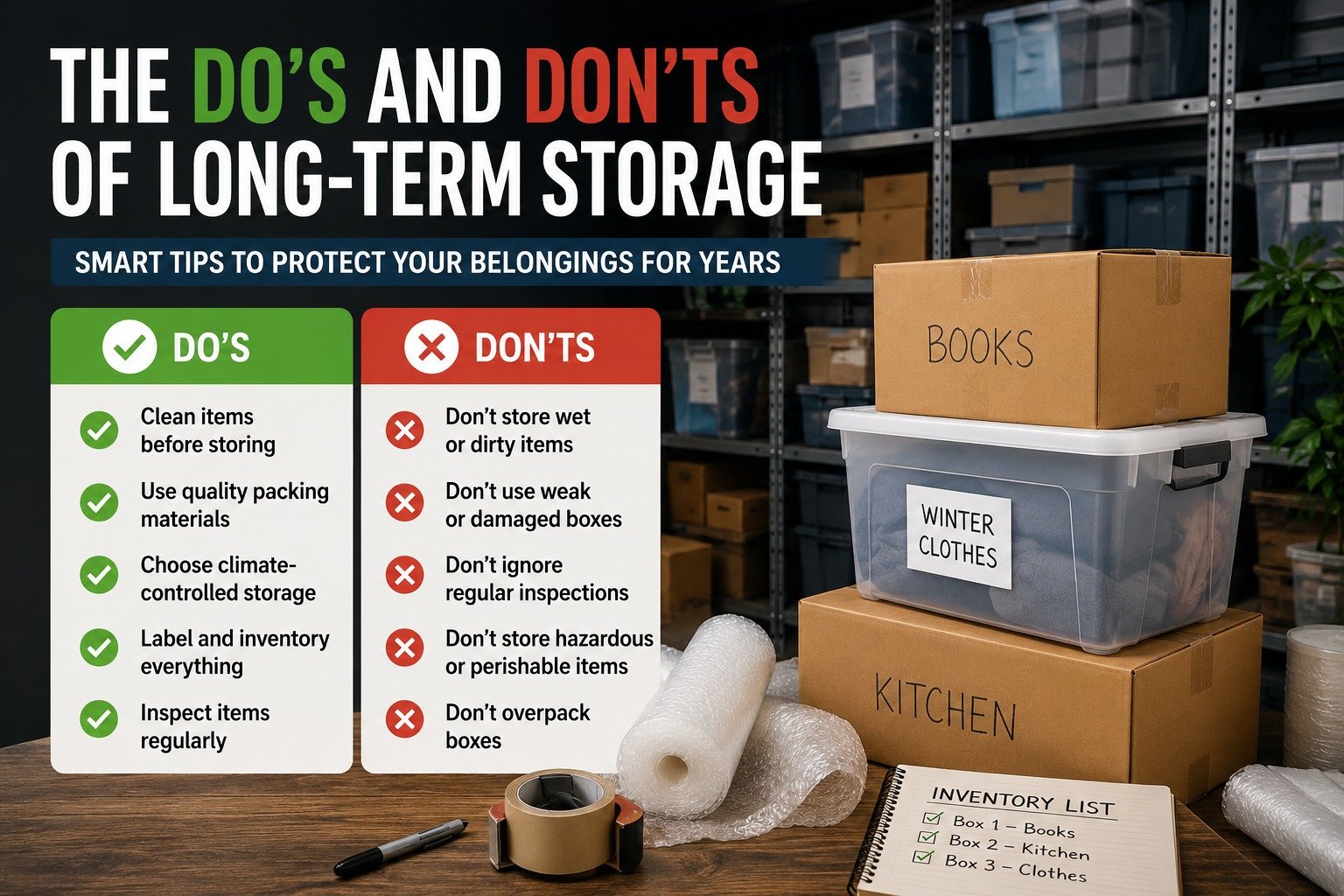
The Do’s and Don’ts of Long-Term Storage
Long-term storage sounds simple—pack your belongings, lock the unit, and come back months or years later. In reality, it takes thoughtful preparation to keep your possessions in excellent condition. Whether you’re moving overseas, downsizing, renovating your home, or simply creating more space, the way you prepare your items today determines their condition tomorrow.
According to recent storage industry guidance, moisture remains the leading cause of long-term storage damage, while climate-controlled units, sealed plastic containers, and regular inspections dramatically reduce the risk of mold, pests, and deterioration. Experts also recommend checking stored items every three months whenever possible.
This comprehensive guide explains exactly what you should—and should never—do when storing belongings for months or years.
Understanding Long-Term Storage
Long-term storage generally refers to storing possessions for six months or longer. Unlike temporary storage, extended storage requires additional planning because environmental conditions gradually affect almost every material.
Wood absorbs moisture and expands. Leather dries out and cracks. Electronics corrode if humidity builds up. Clothing attracts mildew when packed incorrectly. Even paper documents slowly deteriorate if exposed to fluctuating temperatures.
The good news is that nearly all these problems are preventable. Proper cleaning, thoughtful packing, climate control, and organization work together to preserve the value of your belongings. Storage is less about finding empty space and more about creating a stable environment where items remain protected despite changing seasons.
The Biggest Challenges of Long-Term Storage
Many people underestimate what time can do to stored possessions. Even in secure facilities, environmental conditions continuously affect stored materials.
Humidity is often the biggest enemy. Excess moisture encourages mold growth, rust, mildew, and unpleasant odors. Government preservation experts consistently recommend maintaining stable temperature and humidity levels because fluctuations accelerate deterioration.
Pests represent another common issue. Cardboard boxes, food residue, fabrics, and paper attract insects and rodents. Poor organization can also make small infestations difficult to detect until damage has already occurred.
Dust accumulation, poor ventilation, direct sunlight, flooding, and improper stacking add further risks. Understanding these challenges helps you prepare effectively rather than reacting after damage occurs.
The Essential Do’s of Long-Term Storage
- Clean Everything Thoroughly
Never place dirty items into storage. Even invisible food residue or body oils can attract insects and encourage mold.
Wash clothing completely before packing. Clean furniture surfaces with appropriate products. Vacuum upholstered furniture thoroughly. Dry every item completely before boxing it.
Moisture trapped inside sealed containers becomes a breeding ground for mildew. Recent storage experts identify insufficient drying as one of the most common reasons long-term storage fails.
- Choose Climate-Controlled Storage
Climate-controlled storage is worth the additional cost for valuable possessions.
These facilities regulate temperature and humidity, reducing the risk of:
Standard Storage Climate-Controlled Storage
Temperature fluctuations Stable temperatures
Higher humidity Controlled humidity
Greater mold risk Lower mold risk
More damage to electronics Better electronic protection
Greater wood warping Reduced expansion and cracking
Documents, antiques, electronics, musical instruments, artwork, photographs, and wooden furniture especially benefit from climate control.
- Invest in Quality Packing Materials
Cheap boxes often collapse after months under pressure.
Instead, choose:
Durable plastic storage bins
Bubble wrap
Packing paper
Furniture covers
Silica gel moisture absorbers
Heavy-duty packing tape
Recent storage guidance increasingly recommends sealed plastic containers over cardboard for storage exceeding six months because they provide superior protection against moisture and pests.
- Create a Complete Inventory
One surprisingly common mistake is forgetting what’s actually inside storage.
Label every container clearly.
Maintain a digital inventory that includes:
Box numbers
Contents
Photos
Purchase values
Important documents
An inventory saves countless hours when retrieving specific items and simplifies insurance claims if necessary.
- Organize Strategically
Avoid turning your storage unit into a giant puzzle.
Leave small walkways.
Place frequently needed items near the entrance.
Store heavier boxes at the bottom and lighter containers on top.
Avoid stacking fragile items under heavy loads.
Good organization also improves airflow, reducing moisture buildup.
The Critical Don’ts of Long-Term Storage
Don’t Store Wet Items
This cannot be overstated.
Even slightly damp clothing, blankets, furniture, or cardboard can develop mold within weeks.
Always allow freshly cleaned items to dry completely before packing.
Don’t Overpack Boxes
Heavy boxes break.
They also increase injury risk during moving.
Keep individual boxes at manageable weights while filling empty spaces with cushioning materials rather than additional heavy contents.
Don’t Forget Regular Inspections
Long-term storage should never mean “store and forget.”
Experts recommend inspecting stored items approximately every three months whenever practical. Look for moisture, insects, shifting boxes, or damaged containers. Early intervention prevents small problems from becoming expensive disasters.
Don’t Store Hazardous Materials
Never place these items into storage:
Gasoline
Paint thinner
Fireworks
Propane tanks
Perishable food
Live plants
Chemicals
Batteries prone to leaking
These materials present serious fire, health, and pest risks while often violating storage facility policies.
Best Practices for Storing Furniture
Furniture often represents the largest investment placed into storage.
Disassemble beds, tables, and shelving whenever possible.
Wrap wood with breathable moving blankets rather than plastic, which can trap moisture.
Store sofas upright only if recommended by the manufacturer.
Avoid placing heavy objects on mattresses.
Leather furniture benefits from leather conditioner before storage, while wood furniture should receive a protective polish.
Leaving furniture elevated slightly above concrete floors adds another layer of protection against unexpected moisture.
Best Practices for Electronics
Electronics require extra attention because corrosion often begins invisibly.
Before storage:
Remove batteries.
Clean dust from vents.
Wrap cables separately.
Store in original packaging whenever available.
Use anti-static materials.
Humidity remains one of the greatest threats to electronics. Climate-controlled environments significantly reduce long-term damage.
Best Practices for Clothing and Fabrics
Natural fabrics need airflow.
Avoid vacuum-sealing delicate natural fibers for extremely long periods unless specifically recommended.
Use breathable garment bags for suits and dresses.
Wash everything before storage.
Add cedar blocks or lavender sachets instead of mothballs whenever practical.
Keep textiles elevated from floors to avoid accidental water exposure.
Best Practices for Documents and Photographs
Important documents deserve special protection.
Store passports, certificates, photographs, and legal paperwork inside archival-quality folders or acid-free containers.
Government preservation experts recommend stable environments with controlled humidity because paper rapidly deteriorates under fluctuating conditions.
Digital backups provide additional protection.
Scan important paperwork and store encrypted copies in secure cloud storage or external drives.
Long-Term Storage Checklist
Before locking your storage unit, confirm the following:
Task Completed
Cleaned every item ✔
Completely dried belongings ✔
Used sturdy containers ✔
Added moisture absorbers ✔
Created inventory list ✔
Labeled every box ✔
Protected fragile items ✔
Elevated furniture ✔
Removed hazardous materials ✔
Scheduled future inspections ✔
This checklist dramatically reduces the chance of damage while making retrieval much easier.
Conclusion
Long-term storage is about preservation rather than simply finding extra space. Small details—cleaning thoroughly, controlling humidity, using durable containers, and organizing carefully—make an enormous difference over months and years. Spending a little extra time before storage often prevents costly replacements later.
Climate-controlled storage, moisture protection, proper labeling, and periodic inspections remain the foundation of successful long-term storage. Whether you’re protecting family heirlooms, seasonal furniture, business inventory, or treasured memories, following these best practices ensures your belongings remain safe, organized, and ready whenever you need them.
Frequently Asked Questions
- What is considered long-term storage?
Generally, storing belongings for six months or longer qualifies as long-term storage and requires additional preparation compared to short-term storage.
- Is climate-controlled storage worth the extra cost?
Yes. It significantly reduces the risks of mold, humidity damage, warping, rust, and deterioration, especially for valuable or sensitive belongings.
- Should I use cardboard boxes or plastic bins?
For storage lasting more than six months, sealed plastic bins generally provide better protection against moisture and pests than cardboard.
- How often should I check my storage unit?
Experts recommend inspecting stored belongings approximately every three months to detect moisture, pests, or shifting boxes before major damage occurs.
- What items should never be placed in storage?
Avoid storing food, hazardous chemicals, flammable liquids, propane tanks, fireworks, live plants, and damp belongings because they can create safety hazards and damage other stored items.

