
How to Choose the Right Self Storage Unit Size
Introduction
If you’ve ever stood inside a storage facility wondering whether a 5×10 unit will be enough or if you should spend more for a 10×10, you’re not alone. One of the biggest mistakes renters make is choosing a unit based on guesswork rather than careful planning. Rent a unit that’s too small, and you’ll struggle to fit everything inside. Rent one that’s too large, and you’ll spend extra money every month for unused space.
Learning how to choose the right self storage unit size is about balancing your storage needs, budget, and future plans. Recent storage industry guides emphasize that creating a complete inventory before renting is the most reliable way to select the correct unit. They also recommend considering whether you need room to walk inside the unit or simply stack boxes efficiently.
Whether you’re moving, renovating your home, downsizing, storing business inventory, or simply reclaiming space in your garage, this guide will help you make an informed decision.
Why Choosing the Right Storage Unit Size Matters
Selecting the right storage unit isn’t just about fitting your belongings into an empty room. It’s about protecting your possessions while making sure you’re paying only for the space you actually need. Every additional square foot adds to your monthly rental cost, which means even choosing one size larger than necessary can cost hundreds of dollars over the course of a year.
Storage providers consistently report that customers tend to underestimate how much room furniture occupies once it is packed together with boxes, appliances, and oddly shaped household items. At the same time, many renters overestimate the amount of empty space they need because they fail to stack boxes efficiently or disassemble large furniture pieces.
A properly selected storage unit provides several advantages:
Benefit Why It Matters
Saves money Avoid paying for unused space
Protects belongings Prevents overcrowding and damage
Easier organization Items remain accessible
Better ventilation Reduces moisture buildup
Future flexibility Allows for additional items if needed
Choosing wisely from the beginning also saves the inconvenience of transferring your belongings into another unit later.
Understanding Standard Self Storage Unit Sizes
Most storage facilities offer similar standard dimensions. While measurements can vary slightly between companies, the most common sizes remain consistent across the industry.
Unit Size Comparable Space Best For
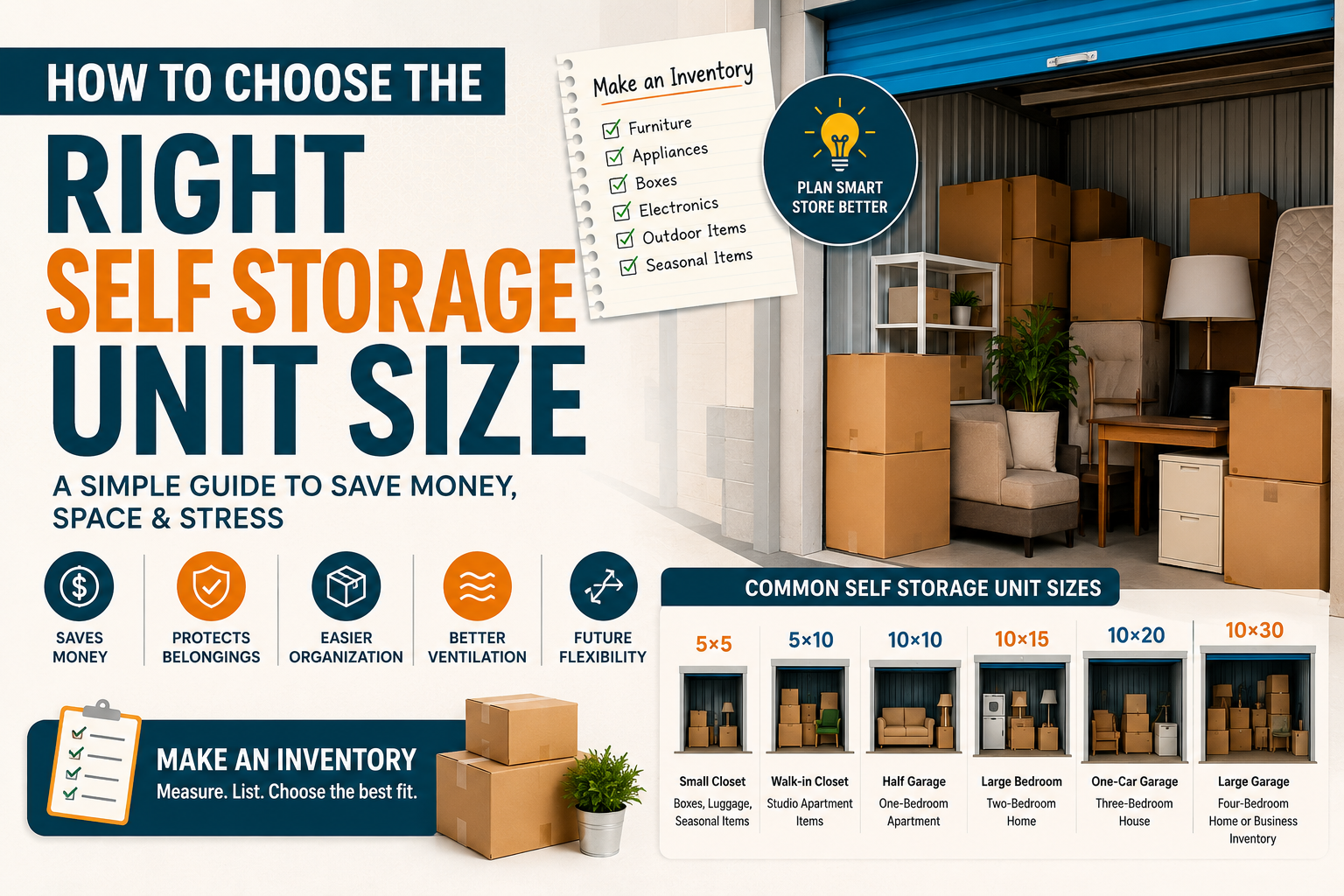
5×5 Small closet Boxes, luggage, seasonal decorations
5×10 Walk-in closet Studio apartment items
10×10 Half garage One-bedroom apartment
10×15 Large bedroom Two-bedroom home
10×20 One-car garage Three-bedroom house
10×30 Large garage Four-bedroom home or business inventory
Industry guides recommend starting with your inventory rather than choosing a size based solely on your home’s square footage because furniture density varies significantly from one household to another.
Small Storage Units
Small units are ideal when you simply need additional household space. Holiday decorations, sporting equipment, college dorm belongings, books, clothing, and small furniture pieces fit comfortably inside these units.
Because these spaces resemble a walk-in closet, they’re often the most affordable option for individuals who don’t require furniture storage.
Medium Storage Units
Medium units remain the industry’s most popular choice.
A 10×10 unit typically accommodates the contents of a one-bedroom apartment, including furniture, appliances, mattresses, and numerous boxes. These units strike an excellent balance between affordability and versatility, making them suitable for families in transition.
Large Storage Units
Large units become necessary when storing entire households, business inventory, commercial equipment, or vehicles.
A 10×20 storage unit generally accommodates the contents of a two- to three-bedroom home, while a 10×30 unit provides enough room for a large family’s belongings or substantial business inventory.
Make an Inventory Before Renting
The smartest way to choose the right storage unit is surprisingly simple: write down everything you plan to store.
Instead of estimating based on memory, walk through your home one room at a time. Count furniture pieces, estimate the number of moving boxes, and note oversized items such as refrigerators, sofas, treadmills, dining tables, bicycles, or office desks.
Creating a detailed inventory offers several benefits. It reduces the likelihood of renting too small a unit, makes it easier to obtain insurance coverage, and simplifies the moving process because you’ll already know exactly what is going into storage.
Professional movers often recommend grouping belongings into categories:
Large furniture
Medium furniture
Appliances
Electronics
Boxes
Fragile items
Seasonal belongings
Outdoor equipment
This approach helps visualize how efficiently everything can be stacked once inside the unit.